Sunday, April 23, 2023

what is ड्रोन तकनीक

ड्रोन तकनीक एक उन्नत तकनीक है जो आजकल बहुत ज्यादा चर्चा में है। ड्रोन एक ऐसी उपकरण होता है जो बिना किसी मानव संचार के उड़ सकता है। इसका उपयोग अनेक क्षेत्रों में किया जाता है जैसे कि सुरक्षा, जलवायु और वन्यजीव विज्ञान, फोटोग्राफी और वीडियोग्राफी, औद्योगिक अभियांत्रिकी और लॉजिस्टिक्स आदि।

ड्रोन तकनीक अधिकतर रिमोट कंट्रोल के जरिए होती है। ये रिमोट कंट्रोल से चलने वाले ड्रोन और प्री-प्रोग्राम्ड फ्लाइट प्लान वाले ऑटोनोम ड्रोन दो प्रकार के होते हैं। ड्रोन तकनीक के उपयोग से निर्धारित क्षेत्रों में फोटोग्राफी और वीडियोग्राफी करने, वन्यजीवों की निगरानी करने, समुद्र तल की गहराई में अनुसंधान करने, जीवन संरक्षण करने, औद्योगिक सुरक्षा करने और बहुत से काम किए जा सकते हैं।

ड्रोन तकनीक में स्वचालित उड़ान योजनाएं, सेंसर, बैटरी, कैमरे और नेविगेशन सिस्टम शामिल होते हैं।

what is न्यूरोनेटिक्स in hindi

 न्यूरोनेटिक्स एक विज्ञान है जो मनोविज्ञान, न्यूरोसाइंस और तकनीक के तत्वों का समन्वय करता हुआ न्यूरल नेटवर्क बनाने के लिए उपयोग किया जाता है। यह नेत्रकी तकनीक को समझने, मनोवैज्ञानिक अध्ययन को न्यूरोसाइंस से जोड़ने और न्यूरल नेटवर्क के उपयोग से संगठित रूप से डेटा को विश्लेषित करने की क्षमता प्रदान करता है।

न्यूरोनेटिक्स के उपयोग से, वैज्ञानिक डेटा और जानकारी का उपयोग कर मनोवैज्ञानिक समस्याओं का समाधान किया जा सकता है। इस तकनीक का उपयोग स्वास्थ्य सेवाओं, सुरक्षा उद्योग, औद्योगिक अभियांत्रिकी, और संचार उद्योग में भी किया जाता है।

न्यूरोनेटिक्स भविष्य के लिए बहुत महत्वपूर्ण है। इस तकनीक के उपयोग से न्यूरल नेटवर्क को और भी संजोगी बनाया जा सकता है और जोड़कर आगे बढ़ाया जा सकता है। यह समाधान के लिए एक अच्छा माध्यम है और समस्याओं को दूर करने में मदद करता ह

यहाँ भारत की 20 शीर्ष प्रौद्योगिकी की बात की जाएगी।

 नमस्ते! यहाँ भारत की 20 शीर्ष प्रौद्योगिकी की बात की जाएगी।

  1. भारतीय रेलवे में डिजिटल टिकटिंग सिस्टम
  2. बायोमेट्रिक पेमेंट सिस्टम
  3. आधार कार्ड और ई-कार्यालय
  4. डिजिटल बैंकिंग
  5. उत्तराखंड में सौर ऊर्जा परियोजनाएं
  6. एग्रीकल्चर टेक्नोलॉजी
  7. ई-वाहन
  8. भारत में डिजिटल शिक्षा
  9. गूगल इंडिक टाइपिंग
  10. भारत में ई-कॉमर्स
  11. खेती उपकरणों का डिजिटलीकरण
  12. स्मार्ट सिटीज़
  13. डिजिटल मेडिकल रिकॉर्ड्स
  14. ब्लॉकचेन तकनीक
  15. इंटरनेट ऑफ थिंग्स (IoT)
  16. सोलर तकनीक
  17. ड्रोन तकनीक
  18. भारत में रोबोटिक्स
  19. न्यूरोनेटिक्स
  20. आईएमएस (Intelligent Manufacturing System)

भारत में तकनीकी उन्नयन तेजी से हो रहा है और आने वाले समय में इस दिशा में और भी बढ़ोतरी की जाने की उम्मीद है। धन्यवाद!

Friday, April 21, 2023

what is AI

 AI stands for Artificial Intelligence. It is an umbrella term for a set of technologies and methods that enable machines to perform tasks that would typically require human intelligence, such as learning, problem-solving, and decision-making.

The photo below shows an example of an AI application, a self-driving car. Self-driving cars use a combination of sensors, machine learning algorithms, and computer vision to perceive their environment and make decisions about how to navigate it. This technology is a good example of how AI can improve our lives by making transportation safer, more efficient, and more accessible.

self-driving car

AI technology can be applied in a wide range of domains, from healthcare and finance to entertainment and education. Some other examples of AI applications include virtual assistants, image recognition systems, and predictive analytics software. As the technology advances, we can expect to see even more exciting and transformative AI applications in the future.

Top 10 latest technology in in india


  1. 5G Technology: 5G technology is the latest wireless communication technology that is currently being rolled out in India. It promises to deliver faster download and upload speeds, improved connectivity, and lower latency.

  2. Artificial Intelligence: AI is a rapidly growing field that is being used in various industries in India, including healthcare, finance, and retail. AI technology is used to automate processes, provide personalized customer experiences, and improve decision-making.

  3. Blockchain Technology: Blockchain technology is a secure, decentralized digital ledger that is being used to store and manage data. It is being used in India to enhance security in industries like finance, healthcare, and supply chain management.

  4. Internet of Things (IoT): IoT technology involves connecting devices and systems to the internet and each other to improve efficiency and automate processes. It is being used in India to optimize energy consumption, improve healthcare services, and enhance transportation systems.

  5. Cloud Computing: Cloud computing allows businesses and individuals to access computing resources over the internet. It is being used in India to improve data storage, increase collaboration, and enhance accessibility.

  6. Virtual Reality (VR) and Augmented Reality (AR): VR and AR technologies are being used in India to enhance customer experiences in various industries, including retail, entertainment, and tourism.

  7. Robotic Process Automation (RPA): RPA technology involves using software robots to automate routine tasks and processes. It is being used in India to improve efficiency and reduce costs in various industries, including banking, insurance, and healthcare.

  8. 3D Printing: 3D printing technology is being used in India to create prototypes, models, and products with complex designs. It is being used in various industries, including healthcare, aerospace, and automotive.

  9. Quantum Computing: Quantum computing is a cutting-edge technology that promises to revolutionize computing power and speed. It is being used in India to improve security, optimize logistics, and enhance drug discovery.

  10. Biometric Technology: Biometric technology involves using unique human characteristics, such as fingerprints or facial recognition, to identify individuals. It is being used in India to enhance security in various industries, including finance, healthcare, and transportation.

what is IOT

 The Internet of Things (IoT) is a network of physical devices, vehicles, home appliances, and other objects that are embedded with sensors, software, and connectivity to allow them to collect and exchange data. The concept of IoT is based on the idea of connecting everyday objects to the internet, allowing them to communicate with each other and with humans in new and innovative ways.

IoT devices can range from simple sensors that collect environmental data, to complex systems that control and monitor entire factories. These devices can be found in various settings, including homes, hospitals, businesses, and cities.

One of the key benefits of IoT is the ability to collect and analyze data in real-time. This allows for more efficient operations and decision-making. For example, IoT sensors can be used to monitor energy consumption in buildings, allowing for more precise control over heating and cooling systems, resulting in significant cost savings.

Another important benefit of IoT is the ability to automate processes. For example, in manufacturing, IoT devices can be used to monitor machines and automatically schedule maintenance when needed, reducing downtime and improving productivity.

IoT is also being used to improve safety and security in various settings. For example, in healthcare, IoT devices can be used to monitor patients and alert healthcare providers if any abnormalities are detected. In smart cities, IoT sensors can be used to detect and respond to emergencies, such as floods or fires.

The growth of IoT has also led to the development of new business models and revenue streams. For example, companies can use IoT data to offer new services, such as predictive maintenance, which allows them to proactively identify and address potential issues before they occur.

Despite the many benefits of IoT, there are also concerns about privacy and security. With so many devices connected to the internet, there is a risk of data breaches and cyber attacks. As IoT continues to grow and evolve, it will be important to address these concerns and ensure that proper safeguards are in place.

In conclusion, IoT has the potential to revolutionize the way we live and work. From improving efficiency and productivity to enhancing safety and security, IoT offers a wide range of benefits. As the technology continues to evolve, it will be exciting to see what new innovations and applications emerge.

[Photo: A smart home with various IoT devices, including a smart speaker, smart thermostat, and smart lights.]

Thursday, December 3, 2020

C TOKENS IN A PROGRAMMING LANGUAGE

 C  TOKENS

Tokens  in c is  the most important elements to be used in a creating 

program in c  the smallest individual unit in c program is known as a 

token or lexical unit  c  tokens can  be classified as  follows 

1.keywords

2.identifiers

3.constants

4.strings

5.special symbols

6.operators

c keywords

c keyword is the words that convey a special meaning to the c compiler.

the keywords cannot be used as a variable name because by doing so, we

are trying to assign a new meaning to the keyword which is not allowed.

the list of c keywords is given below:

1.auto     2.continue     3.enum     4. if   5.short       6. switch     7. volatile    8.break    9.  default   10. extern    11. int      12. signed      13.typedef  14.while      15.case      16.  do   17. float   18.long     19. sizeof    20.union       21.char   22. double  23. for         24. register   25.static  26.unsigned     27. const      28. else      29.goto    30.return    31. struct    32. void

thans for  reading  this post so please  share  and follow this blog.

Sunday, October 18, 2020

Basic data structures in c programming language

 data structure

 a data structure is a way of  collecting and organizing data in  such a way

 that  we  can  organize  this  data   as   a   record   like way  any  person 

which  will   have  both man   name age  or  address that's  it  now  we can

 store a record or  information in  a  file or database as data  structure

 for  example 

                        Ram                   21                Delhi  

                        Rohan                 18               Lucknow

Basic type of data structures

we have   discussed anything that  can  store  data can be could as  a  data 

structure, hence integer, float, boolean, char, etc,  all  are the data structure

they are known as a primitive  data structure

then we also have  some complex  data structure which is used to  store 

large and connected data some example of an abstract data structure are

Linked list

Tree

Graph

Stack, queue, etc

all these data structures allow   us to perform different operation s on data

we select these data structures based  on which type of operation is 

required we  will look into these data structure in more details in our later

lessons.


Saturday, May 9, 2020

basic knowledge computer fundamental

                           BASIC COMPUTER FUNDAMENTAL 

                                          KNOWLEDGE


      What is computer 

         computer is an advance electronic device this means to calculate any mathematical value or 
         programmable  machine computer can not anything without a  program.
         

       The main hardware part of computer system 

           Processor

           Main memory

           Secondary memory 

           Input devices

           Output devices

         What is processor 

             A processor, or "microprocessor," is a small chip that resides in computers and                   other electronic devices. Its basic job is to receive input and provide the appropriate
           output .

        Main memory (primary memory )

  • ROM
  • RAM          
   ROM (Read only memory)

    Short for read-only memory, ROM is a storage medium that is used with computers and other electronic devices. As the name indicates, data stored in ROM may only be read. ... Unlike RAM (random access memory), ROM is non-volatile, which means it keeps its contents regardless of whether or not it has power  
  • Programmable Read only memory (PROM)
  • Erasable programmable Read only memory (EPROM)
  • Electrical Erasable programmable Read Only memory (EEPROM)

      RAM (Random access memory)
       
     Random-access memory (or simply RAM) is the memory or information storage in a             computer that is used to store running programs and data for the programs. Data                   (information) in the RAM can be read and written quickly in any order. Normally,
       the random access memory is in the form of computer chips.

  • Dynamic RAM(DRAM)

  • Synchronous DRAM(SDRAM)
  • Static RAM(SRAM)

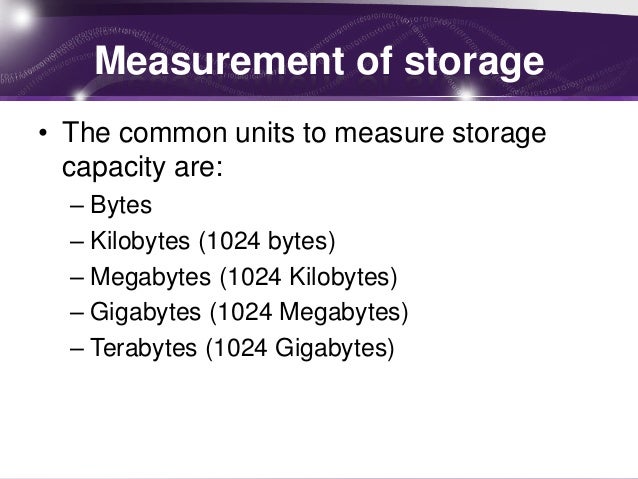
 Image result for measure of memory capacity  

 Type of ram

ram is available in two basic types.
  • dynamic random access memory (dram)
  • static random access memory (SRAM)
type of ram
type of ram

1.dynamic random access memory

dynamic random access memory-DRAM
DRAM

The dram is a type of random access memory in computers. it uses memory cell which is a combination of transistor and capacitor to store each bit of binary data 0 or 1.

in the memory cell, the capacitor either charged or discharged to indicated the on or off. which signal further converted into binary number 0 or 1 to understand.


what is ड्रोन तकनीक

ड्रोन तकनीक एक उन्नत तकनीक है जो आजकल बहुत ज्यादा चर्चा में है। ड्रोन एक ऐसी उपकरण होता है जो बिना किसी मानव संचार के उड़ सकता है। इसका उपयो...